Building a Fire-Cooked Kitchen in Gurgaon | 3500+ Orders Later
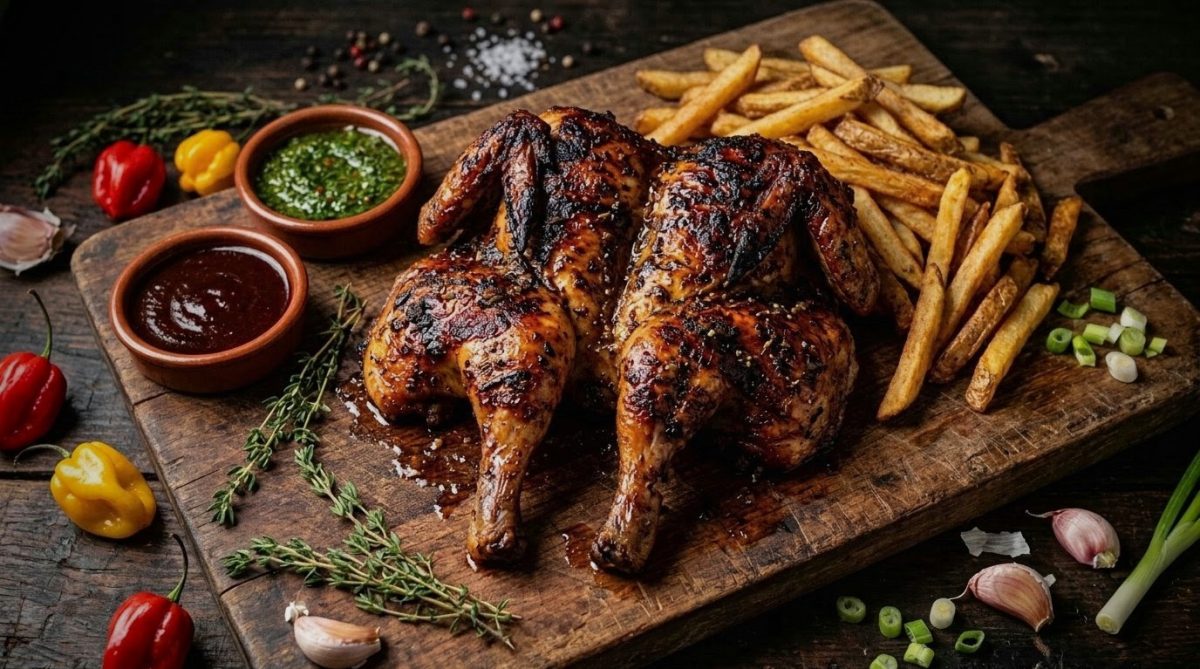
Building a Fire-Cooked Kitchen in Gurgaon: What We Learnt After 3500+ Orders
It has been a little over two months since we last wrote about our experience of building BraaiCraft Smokehouse in Gurgaon. At the time, we were moving beyond the initial launch and stabilisation phase, beginning to understand our customers and seeing the first signs that there was an audience here for the kind of food we wanted to cook. A lot has happened since then.
By the end of July 2026, we had served more than 3500 orders. Our Average Order Value (AOV) has reached and is maintaining our planned level of around ₹1,200, while repeat customers now stand at 23.4%. Our ratings have also remained steady at 4.2 on Zomato, 4.3 on Swiggy and 4.7 on Google. Direct orders through our own website are increasing, and perhaps the most encouraging development has been the number of new customers who call us after being recommended by someone who has already ordered from us.
The menu has evolved as well. We have introduced more fire-cooked food from different parts of the world, discovered some unexpected customer favourites and learnt that Gurgaon is far more adventurous about food than we initially assumed. We have also had dishes that did not work, dishes that needed changing and even dishes that sold well but had to be removed for reasons that had nothing to do with food.
After 3500+ orders, we are no longer trying to guess what might happen. We now have enough real customer behaviour to begin understanding what works, what doesn’t and, more importantly, why.
Exploring Fire-Cooked Food From Around the World
BraaiCraft Smokehouse has never been intended to represent one particular cuisine. The common thread running through our menu is fire and the different ways people around the world have learnt to cook with it.
Fire cooking is much older than the idea of cuisine itself. Cultures separated by continents developed their own techniques around wood, charcoal, smoke and slow heat. South Africa has the Braai, Argentina and Uruguay have Asado, Jamaica developed Jerk cooking, while roasting, smoking and slow cooking appear in countless forms across Europe, Asia and the Americas. That gives us an enormous culinary world to explore without losing the identity of BraaiCraft Smokehouse.
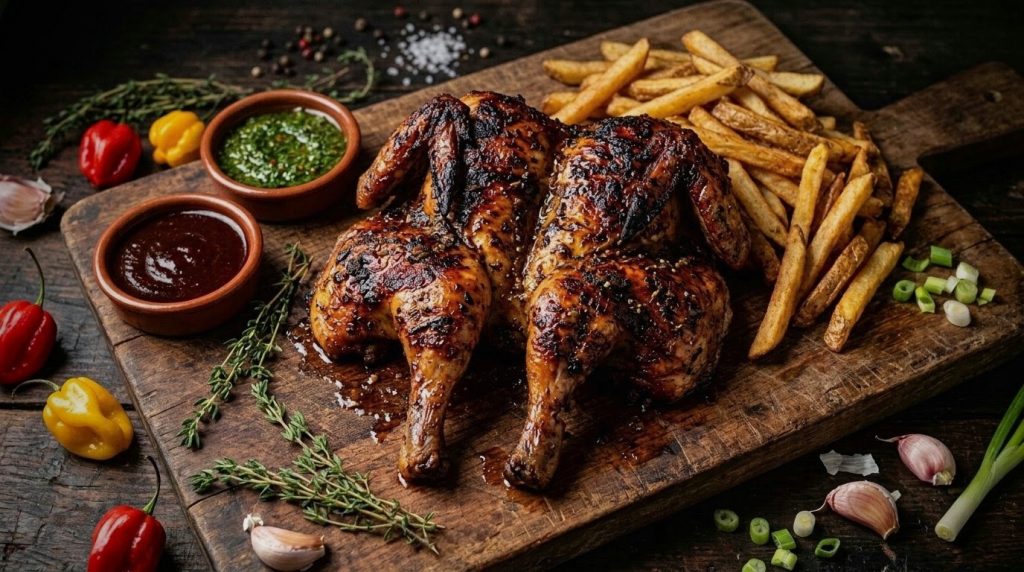
Over the past two months, two of the most important additions to that exploration have been our Jamaican Jerk Chicken and Peri Peri Chicken. Both became immediate favourites and, within a relatively short period, earned the Highly Reordered tag on Zomato. We find the “reordered” part considerably more interesting than simply seeing strong initial sales. A new dish can sell because somebody is curious. Ordering it again means they actually want to eat it again.
Our Jamaican Jerk Chicken brings a completely different flavour profile to the menu. The chicken is marinated overnight in a vibrant jerk marinade before being braaied over live fire. The Peri Peri Chicken follows the same fire-led philosophy but brings a different combination of chilli, acidity and seasoning. Neither is simply chicken cooked conventionally and covered with a flavoured sauce afterwards. The preparation and the fire are integral to the final taste.
Their success has reinforced something we had already begun noticing through our existing menu: Gurgaon likes bold food. That can mean chilli heat, but it can also mean what many customers describe as “masala spicy” – food with a strong presence of seasoning and spices even when it is not excessively hot.
Our Buffalo Wings and burnt jalapeño spicy Choripan demonstrated this fairly early. Their performance was one of the reasons we became more confident about introducing Braai Grilled Chicken and subsequently Jamaican Jerk and Peri Peri Chicken. Each has its own flavour profile, but all of them deliver the intensity that many customers here clearly enjoy while remaining true to our preference for live-fire and slow cooking.
The Old Favourites Are Holding Their Ground
The arrival of new dishes has not displaced the food that helped establish BraaiCraft Smokehouse. Our Braai Grilled Chicken continues to remain one of our signature dishes. Buffalo Wings, BBQ Wings, Choripan, and both our Buffalo Wings Burger and BBQ Wings Burger continue to be among our most frequently ordered items, particularly within the bolder and spicier side of the menu.
Duck continues to be one of the most interesting stories for us. When we started serving it, we expected curiosity but assumed it would remain relatively niche. Duck is still unfamiliar to a large number of Indian diners, and many customers who call us have never eaten it before. Yet our Duck Roast and Duck Burgers continue to be stars of the menu.
We regularly speak to customers who want to know what duck tastes like, whether it is very different from chicken and whether they should try it. What we have discovered is that once the initial hesitation disappears, people are remarkably willing to experiment. More importantly, they come back for it. Watching people discover a meat they previously considered exotic and then reorder it has been one of the more satisfying aspects of running the Smokehouse.
We have one customer who has ordered our duck roast 23 times, sometimes twice in a day. They have been our star customer since our launch phase.
This experience has changed one of our own assumptions. Customers are not necessarily reluctant to experiment; they are reluctant to spend money on something they don’t understand. There is a significant difference between the two. If you explain what a dish is, how it is cooked and what somebody should expect from it, unfamiliar food suddenly becomes much more approachable.
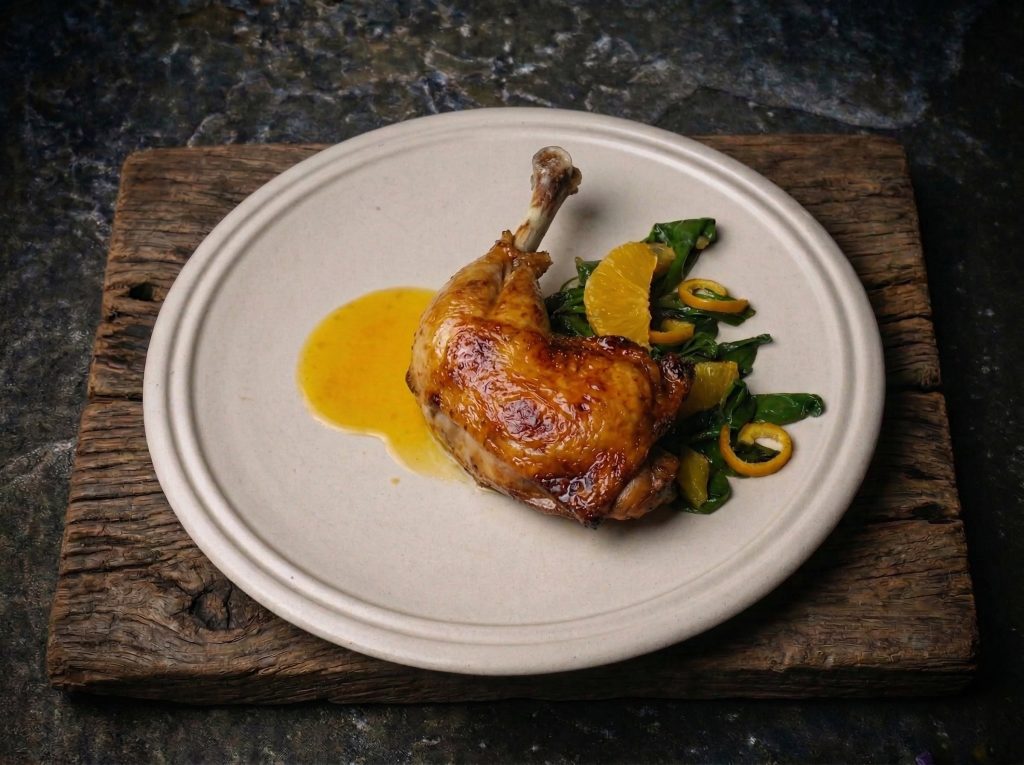
Chicken Confit: An Unfamiliar Technique With a Familiar Meat
Our experience with confit has reinforced the same lesson. Duck Confit is one of the classic examples of the French technique, but both the meat and the word “confit” can be unfamiliar to someone encountering the dish for the first time. We wanted to see whether the technique could be made more approachable without simplifying the process itself.
That led us to introduce Chicken Confit. We keep the same process we use for the duck: the meat is dry-aged, smoked and then slowly confited over low heat until it becomes extremely tender and begins to fall away from the bone. It is finally finished in a cast-iron skillet, giving the outside texture while retaining the tenderness created by the slow cooking process.
The only significant change is the protein. Chicken is familiar, which makes the technique less intimidating. The response has been excellent, and Chicken Confit has become one of our popular gourmet dishes. For some customers, it has also become an introduction to confit before they decide whether to explore the duck version.
This is increasingly becoming an important part of what we enjoy about the menu. We are not interested in making unfamiliar food complicated simply for the sake of appearing gourmet. If a traditional technique can be introduced through an ingredient somebody already understands, it creates a much easier path towards exploring something new.
Our Most Unexpected Favourite Is Mashed Potatoes
For all the time we spend thinking about fire, meat and cooking techniques, one of the biggest surprises on our menu has been something far simpler: mashed potatoes.
Our Mashed Potatoes are technically a supplemental item, but customers don’t always treat them that way. They are the only supplemental item on the menu that people regularly order on their own. Occasionally, an order will arrive containing three or four portions of mashed potatoes and absolutely nothing else. Even more amusingly, these orders almost always seem to earn us five-star reviews.
There is no BraaiCraft secret behind them. We don’t smoke the potatoes, add unusual ingredients or try to reinvent the dish. We simply follow the classic British recipe to the T and make them the way proper mashed potatoes are supposed to be made. The only thing we did was experiment with various potato varieties available in the market and the butter we use.
It has become one of our favourite examples of how customers sometimes reject the restaurant industry’s constant need to reinvent familiar food. Not everything needs an interpretation, a twist or a signature addition. Some dishes have survived for generations because they are already very good. The job of the kitchen is simply to make them properly.
Apparently, when that happens, people will happily order four portions.
The Menu Has Also Taught Us to Listen
Not everything we introduce works immediately, and not everything deserves to remain on the menu. Being an independent kitchen gives us the freedom to experiment, but experimentation is only useful if we are also willing to accept when something needs changing.
Our Pigs in Blanket is a good example. The initial feedback wasn’t about flavour. Customers liked the dish but felt that the sausages were too small, which made the overall quantity seem insufficient for the price. It was fair feedback. We increased the number of sausages and switched to thicker bacon. The revised version was received considerably better and is the version we continue to serve.
Our Mushroom Sauce had a different problem. It simply didn’t find enough takers, even when offered as an add-on. We personally enjoyed it, but there wasn’t enough customer demand to justify keeping it on the menu. So we removed it. A menu does not need to demonstrate everything a kitchen knows how to prepare. Every item has to justify its place.
Then there were our Tiramisu and Rum Balls. Both were made following the classic recipes – using alcohol- and the Tiramisu in particular sold very well. However, well-wishers pointed out that using even a small quantity of alcohol in food apparently requires the relevant Excise licence. Once this was brought to our attention, continuing to sell them did not make sense to us. We therefore stopped both items despite the demand for the Tiramisu.
It was an interesting reminder that not every menu decision is driven by whether customers like something. Running a food business involves regulations, licences, compliance requirements, food safety and platform policies alongside the actual cooking. Sometimes a product that works perfectly well from a culinary and commercial point of view still has to disappear.
Why We Prefer Limited Batches and Pre-Orders
One thing that has become clearer as order volumes have grown is that BraaiCraft Smokehouse cannot, and should not, operate like a conventional fast-food kitchen.
Many of our meats go through several stages before they ever become a finished dish. We dry-age, smoke and then cook them using methods that depend upon time and controlled heat. Removing or rushing one of those stages changes the final product. There is no useful shortcut to a process whose entire purpose is to let time do part of the cooking.
For this reason, rather than preparing large quantities of food continuously throughout the day and holding them until orders arrive, we prefer opening slots for orders when a batch is approaching readiness. This allows us to dispatch the food as close as possible to when that particular batch has been prepared.
Pre-orders are even better. We genuinely enjoy receiving them because they allow us to prepare according to confirmed orders and time the cooking around the customer rather than hoping that already prepared food will sell. In many cases, that means the order is effectively being made specifically for the person who has ordered it. These pre-orders are mostly bulk orders, and we appreciate customers who prefer coming to the kitchen to pick them up, which also allows us an opportunity to interact with them and show our BraaiCraft equipment.
This is also why several items on our menu are available in limited batches. Once a batch sells out, preparing another is not simply a matter of putting more meat on a hot plate. The entire process begins again. We would rather temporarily sell out than remove the steps that make the dish what it is. Now having sales trend data from our POS, we make informed predictions for the quantity of food to prepare, which has led to significantly less wastage.
For customers accustomed to instant availability, this may occasionally be inconvenient. From our perspective, however, it is fundamental to maintaining the quality of the food we want to serve while keeping the wastage low.
Customers Want to Know the Story Behind Their Food
Something we did not anticipate when we started was how often customers would want to speak to us before placing an order. We receive calls and WhatsApp messages from people trying to understand the menu, asking for recommendations or simply wanting to know what makes BraaiCraft Smokehouse different from other gourmet delivery kitchens.
Some ask what “Braai” means. Others want to understand Confit or Choripan. Many people considering duck for the first time want to know what it tastes like. Others ask how our Braai Grilled Chicken differs from the grilled chicken they already know. These conversations last several minutes, and we enjoy having them because they tell us that people are genuinely interested in what they are ordering.
Most customers who contact us this way eventually order through our website, although some still prefer to complete their purchase through Zomato or Swiggy because those platforms are familiar to them. What is particularly encouraging is how these conversations usually begin: someone recommended BraaiCraft Smokehouse to them.
This has made us realise that explaining the food is part of what we do. A menu description can only say so much. When a person understands why a dish takes a particular amount of time, why duck tastes different from chicken or why something has been cooked over fire rather than on a conventional electric grill, the food itself becomes easier to appreciate.
Authenticity has value, but only when people understand what makes something authentic.
Word of Mouth Has Worked Better Than Influencer Marketing
Like most restaurants today, we are regularly approached by food influencers offering collaborations. We agreed to a handful of non-monetary barter arrangements after being approached by them, providing food in return for social media reels and posts. The influencers delivered what was agreed and posted reels and stories, but the experience also taught us something about the type of marketing that suits BraaiCraft Smokehouse.
In several cases, the creators simply did not connect with the flavour profile or the idea behind the food in the way we had hoped. The content existed, but the excitement about what makes the food different was missing. This isn’t necessarily a criticism of the creators. Food content on social media tends to favour things that produce an immediate visual reaction, whereas much of what differentiates our food happens before the plate ever reaches the camera.
Dry-ageing isn’t particularly dramatic to watch. Neither is waiting for meat to cook slowly. The difference between something genuinely cooked over fire and something cooked conventionally and finished with a smoky sauce may not be obvious in a short reel. The difference becomes much clearer when you eat it.
Meanwhile, recommendations from actual customers have consistently produced more meaningful results. We increasingly receive calls beginning with, “Someone recommended you”, followed by questions about what they should order. Those customers arrive with a degree of trust already established because the recommendation came from someone whose opinion matters to them.
For us, word of mouth has so far proven far more valuable than influencer reach. It may be slower, but the people it brings are far more likely to understand what we are trying to do.
Direct Orders Are Becoming an Important Part of Our Growth
The growth in direct orders through our website has been another encouraging development. Price is certainly one reason. We provide free delivery for direct orders within 10 kilometres and regularly offer coupons, which means customers can often save significantly compared with ordering the same meal through an aggregator.
However, price is only part of the story. A growing number of customers tell us they deliberately prefer ordering directly because they know how much food delivery platforms charge restaurants. They want to save money themselves, but they also want more of what they spend to reach the restaurant preparing their food.
Customers are becoming increasingly aware of the economics of aggregators. For restaurants, the expense goes well beyond the headline commission. Basic commission, long-distance enablement fees for deliveries beyond certain distances, payment mechanism fees, advertisements, promotions, etc on these various charges can collectively consume upwards of 40% of the sale value of an order; then comes the taxes.
That is before the restaurant has paid for the ingredients, staff, rent, utilities, packaging or any of the other costs involved in actually preparing the food.
This does not mean aggregators provide no value. Zomato and Swiggy have transformed food discovery and delivery in India. They provide enormous reach, sophisticated technology and logistics that would be extremely difficult for an individual restaurant to recreate. They are also businesses, and naturally look for ways to generate revenue from the ecosystem they have built.
The problem for restaurants is dependence. When the majority of your customers, visibility and logistics belong to another company, changes in commissions, advertising costs, or platform policies immediately affect your business. Depending indefinitely on aggregator advertising and promotions is therefore not sustainable for us.
Building a direct relationship with customers is not simply about saving commission. It allows us to communicate with the person eating our food, explain the menu, receive feedback and gradually build a customer base that knows BraaiCraft Smokehouse independently of the platform through which they first discovered us.
We also add the direct ordering customers to our Inner Circle, where we offer our Secret Menu and access to our upcoming BBQ Workshops and Events – more on this later.
Growth After the Launch and Stabilisation Phase
From a business perspective, the past two months have been considerably different from the initial launch period. We have seen a steep rise in sales compared with the launch and stabilisation phases and have now reached the AOV we originally planned for the business: approximately ₹1,200.
More importantly, 23.4% of our customers are repeat customers. For us, that number matters more than a temporary spike in orders generated through discounts or advertising. A first order can come from curiosity, a promotion or a recommendation. A repeat order means the food itself has given the customer a reason to return.
By the end of July 2026, we had crossed 3500 orders. That is still a relatively small number in the context of the restaurant industry, but it is enough to start seeing genuine behavioural patterns rather than relying on assumptions. We can see which dishes people reorder, which flavour profiles work, where customers are willing to experiment and which products simply do not find an audience.
The growth in direct orders is another important signal. So is the increasing number of people who contact us after receiving a recommendation. Taken together, these developments suggest that the business is gradually moving from discovery towards loyalty.
That is a much healthier kind of growth.
Ratings Are Only One Part of the Story
As of the end of July 2026, our ratings remain at 4.2 on Zomato, 4.3 on Swiggy and 4.7 on Google. Maintaining these ratings while order volumes increase is something we are pleased about, although the experience has also shown us how imperfect ratings can be as a measure of customer satisfaction.
One of our biggest challenges is simply getting happy customers to review their experience. Someone who enjoys dinner often finishes their food, gets on with their evening and perhaps orders from us again a week later. They have little reason to immediately open an app and write about something that went exactly as they expected.
A small problem creates a very different reaction. A sausage can shift or fall out of a Choripan during transit, or somebody can order a dish clearly described on the menu as having a mild flavour profile and then be disappointed because it isn’t spicy enough. Suddenly, leaving feedback becomes much more urgent.
This isn’t unique to us; it is simply how people tend to behave. Negative experiences often generate a stronger response than positive ones. However, it does mean that repeat behaviour sometimes tells us more than ratings do. A customer may happily order from us six or seven times without ever leaving a review because every meal met their expectations. Then, if something is slightly off with the eighth order – even if it is a minor issue – they are far more likely to leave a review than they were after all the previous positive experiences. It is simply human nature, and one of the realities of running a delivery-first restaurant.
That is also why every genuine positive review matters so much to a small independent restaurant.
What 3500+ Orders Have Taught Us
The strongest lesson from our first 3500 orders is that people are far more adventurous than we expected. Gurgaon customers are willing to try unfamiliar meats, cooking techniques and dishes from cuisines they may know very little about. Duck is probably the clearest example. We expected it to remain niche; instead, Duck Roast and Duck Burgers have remained stars.
We have also learnt that explanation matters. Customers appreciate authenticity once they understand the story behind the food. “Confit” can sound intimidating until somebody explains what the process actually involves. Braai becomes more interesting once you understand that it describes an entire culture of cooking over fire rather than simply another word for barbecue. Limited batches make more sense when customers understand that the meat has been dry-aged, smoked, and slowly cooked rather than assembled after an order arrives.
Word of mouth has also proven more powerful than we expected. Paid visibility can introduce people to a restaurant, but recommendations create trust. The increasing number of customers reaching us because someone they know told them to try BraaiCraft Smokehouse is perhaps the strongest indication that we are moving in the right direction.
And finally, customers appreciate things being done properly, whether those things are complicated or incredibly simple. Chicken Confit can require multiple stages of preparation and become a favourite. At the same time, classic British mashed potatoes prepared without reinvention can inspire someone to order four portions and leave five stars.
There is a lesson in both.
Where We Go From Here
Our next objective is straightforward: reach more people without losing the identity that brought us this far. That does not mean making the menu larger simply for the sake of offering more choices. We want to continue exploring fire-cooked dishes and traditional cooking techniques from around the world, but every new item has to earn its place.
A dish needs to fit the BraaiCraft Smokehouse philosophy. It needs to respect the cooking tradition that inspired it, work with our fire-led approach and, importantly, survive the realities of delivery without losing what makes it worth eating. If it cannot do those things consistently, there is little reason to add it to the menu.
We also want to continue growing direct relationships with customers. Aggregators will remain an important part of how people discover and order from us, but long-term sustainability requires a business to have customers of its own. The growth in website orders, pre-orders and direct conversations is therefore just as important to us as growth in overall sales.
When we started BraaiCraft Smokehouse in Gurgaon, we did not know how large an audience existed for a delivery kitchen centred around genuine live-fire cooking, slow preparation and dishes that often require a little explanation. More than 3500 orders later, we have a much clearer answer.
People are willing to experiment. Duck isn’t as intimidating as we thought. Jamaican Jerk and Peri Peri Chicken can become highly reordered favourites within weeks. Chicken Confit can make an unfamiliar French technique approachable. Choripan can find an enthusiastic audience in Gurgaon. And properly made mashed potatoes can somehow develop a following of their own.
Most importantly, we have learnt that people appreciate authenticity once they understand what goes into their food.
That is what we intend to keep building on: more fire-cooked food from around the world, more traditional techniques, more direct relationships with the people ordering from us and fewer reasons to take shortcuts.
After 3500+ orders, it still feels like we are only getting started.
FAQs
BraaiCraft Smokehouse focuses on authentic live-fire cooking inspired by traditional techniques from around the world. Instead of relying on gas grills or artificial smoke flavours, many dishes are cooked over charcoal and wood, allowing the fire itself to become part of the flavour.
Fire-cooked food refers to dishes prepared using live fire, charcoal or wood rather than conventional cooking methods alone. The combination of radiant heat, smoke and slower cooking develops flavours and textures that are difficult to recreate using gas or electric cooking equipment.
Braai is the traditional South African method of cooking over live fire. More than just a barbecue, it is a style of cooking that celebrates charcoal, wood smoke, patience and bringing people together around food.
Many of our dishes are dry-aged, smoked and then slow-cooked before they are served. These processes cannot be rushed without compromising quality. Preparing smaller batches allows us to serve food closer to when it is ready instead of holding it for extended periods.
Chicken Confit BraaiCraft Smokehouse’s take on Duck Confit which is prepared using the traditional French confit technique. The chicken is dry-aged, smoked and then slowly cooked in fat over low heat until it becomes exceptionally tender before being finished in a cast-iron skillet.
Yes. Many of our customers try duck for the first time at BraaiCraft Smokehouse. We regularly recommend Duck Roast or Duck Burgers to first-time diners because they offer an approachable introduction to duck while showcasing its rich flavour.
Some of our most popular dishes include Braai Grilled Chicken, Jamaican Jerk Chicken, Peri Peri Chicken, Duck Roast, Chicken Roast, Duck Burgers, Buffalo Wings, BBQ Wings, Choripan and Chicken Confit. Our classic British-style Mashed Potatoes have also become an unexpected customer favourite.
Many customers contact us to understand the menu, cooking techniques and flavour profiles before ordering. We enjoy helping people discover unfamiliar dishes such as Duck Roast, Chicken Confit or Galantine and recommending items based on their preferences.
Ordering directly through our website allows customers to access exclusive offers, free delivery within eligible areas and occasional coupon codes. It also helps support the restaurant more directly by reducing third-party platform costs.
We regularly research traditional fire-cooked dishes from around the world, but new menu items are introduced only after they meet our standards for flavour, consistency and suitability for delivery.
The biggest lessons have been that customers are more adventurous than expected, word of mouth is more valuable than influencer marketing, authenticity matters when people understand the story behind the food, and simple dishes prepared properly can be just as memorable as complex ones.
The Jamaican Jerk Chicken is the most popular on the menu, with 20% repeat orders.
